

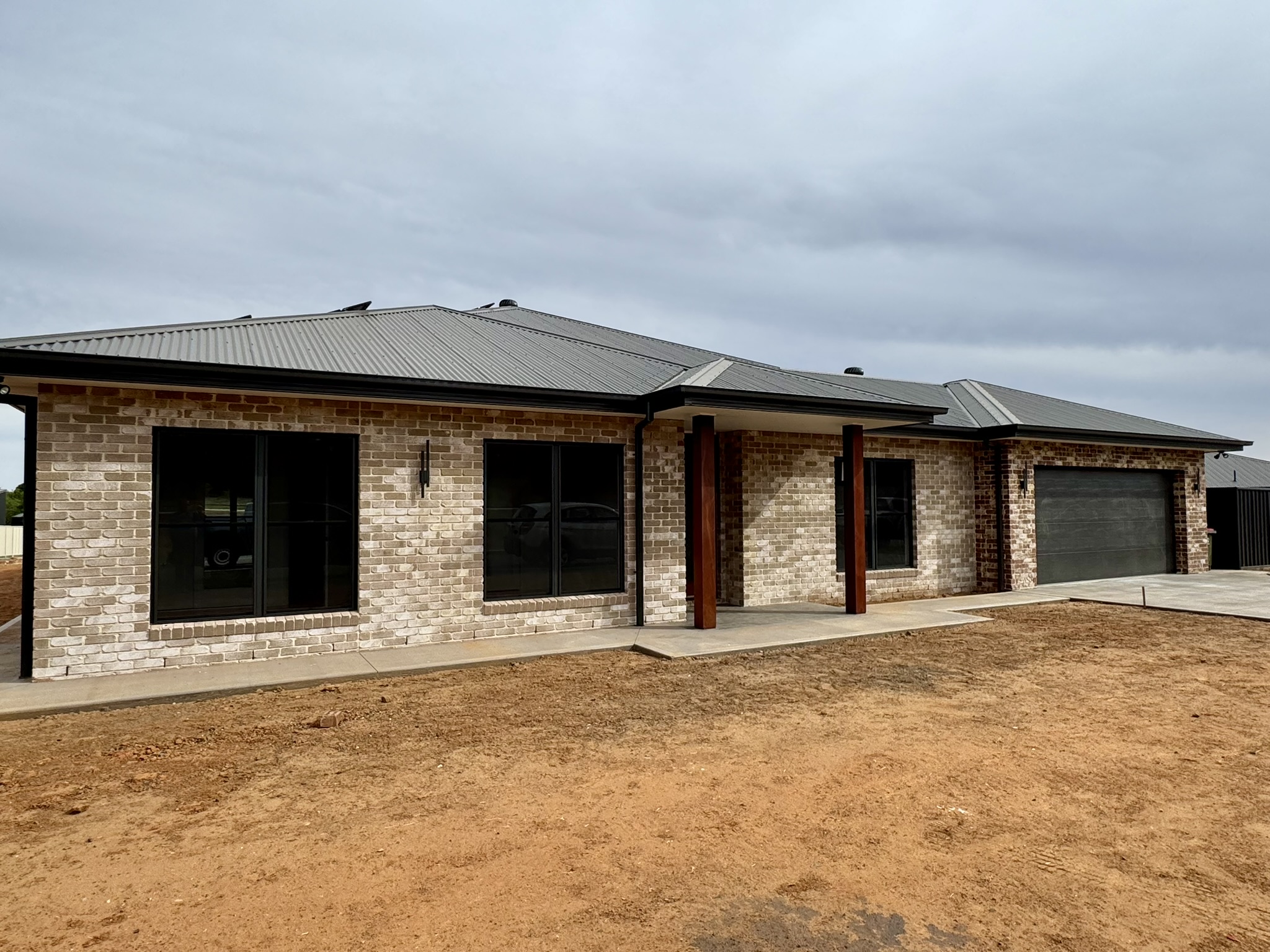
Every NSW grant and federal deposit scheme has a price cap. When you build, the one that matters most is $750,000, and it covers your land and your house together.
The first home owners grant NSW pays $10,000 to eligible first home buyers who build a new home, as long as the land, the building contract and any variations add up to $750,000 or less. On top of the grant, first home buyers pay no transfer duty on vacant land worth up to $350,000, and they can use a federal scheme such as the 5% Deposit Scheme or Help to Buy to get into a loan with a smaller deposit.
If you’re a couple or a young family in Dubbo working out whether building is within reach, that help can close a big part of the gap. Most first home buyers who build with Robinson & Fuller Homes choose from the Classic Range, and this guide explains each scheme the way it works on a build, not on a house you buy finished.
The short version
- $10,000 First Home Owner Grant: your land, building contract and variations must total $750,000 or less.
- No stamp duty on vacant land up to $350,000, and reduced duty up to $450,000.
- The 5% Deposit Scheme and Help to Buy both cap a Dubbo land and build at $800,000.
- Your bank or broker lodges the grant for you. Talk to us before you buy land: (02) 6882 7444.
Jump to:
- What you can claim
- How the $10,000 grant works on a build
- Stamp duty on your land
- The federal deposit schemes
- Why $750,000 matters in Dubbo
What grants can first home buyers get in NSW when they build?
You can claim the First Home Owner Grant, stamp duty relief on your land, one of two federal deposit schemes, and the First Home Super Saver scheme. Here’s how each one applies to a land and build in Dubbo.
| Scheme | What you get | The cap for a Dubbo build | Who you apply through |
|---|---|---|---|
| First Home Owner (New Homes) Grant | $10,000, tax free and not means tested | Land, building contract and variations together: $750,000 | Your bank or broker, or Revenue NSW once the home is finished |
| First Home Buyers Assistance Scheme | No transfer duty on vacant land up to $350,000, reduced duty up to $450,000 | The value of the land | Revenue NSW |
| 5% Deposit Scheme | Buy with a 5% deposit and no lenders mortgage insurance | Land and build together: $800,000 | A participating lender |
| Help to Buy | The government contributes up to 40% of the price of a new home, with a deposit from 2% | Land and build together: $800,000, plus income limits | A participating lender |
| First Home Super Saver scheme | Withdraw voluntary super contributions to put towards your deposit | Release limits set by the ATO | The ATO, through myGov |
State help and federal help work side by side
The NSW Government runs the grant and the stamp duty relief through Revenue NSW. The federal schemes are run by Housing Australia and reach you through a participating bank. Revenue NSW states that the First Home Owner Grant can be paid in addition to other exemptions and concessions, so you can use it alongside the stamp duty exemption. Your broker can confirm how a federal scheme fits with both.
Building qualifies you for more than buying established
The $10,000 grant is only paid on new homes, so a first home buyer who buys an established house misses out on it.
How does the $10,000 First Home Owner Grant work when you build?
When you build, the grant pays $10,000 as long as the value of your vacant land, your comprehensive building contract and any building variations comes to $750,000 or less combined. The rules on who qualifies and how long you live there are the same as for a buyer.
The $750,000 cap counts your land, your contract and your variations
Revenue NSW adds three things together: what you paid for the land, the price in your building contract, and the cost of any variations made during the build. A variation is a change you sign off after the contract, such as a bigger island bench or extra power points. Each one adds to the total, so a build quoted just under $750,000 can tip over the cap with a few late changes.
Who is eligible for the grant
You can claim the grant if you are 18 or over, at least one buyer is an Australian citizen or permanent resident, and you’re buying as a person rather than a company or trust. Neither you nor your partner can have received a First Home Owner Grant before. You also can’t have owned a home in Australia before 1 July 2000, or lived for six continuous months in a home you owned after that date.
When the money arrives on a build
On a build, the grant can be paid in time for your first progress payment. Revenue NSW says to apply through the approved agent providing your loan when you need the grant for your first progress payment. If you finish building without it, you can still apply directly to Revenue NSW within 12 months of completion.
Moving in and living there for 12 months
For contracts signed on or after 1 July 2023, you need to move into your new home within 12 months of it being finished and live there for 12 continuous months. If your plans change and you can’t, you have to tell Revenue NSW and repay the grant.
Do first home buyers pay stamp duty on land in NSW?
Not if the land is worth $350,000 or less, thanks to the First Home Buyers Assistance Scheme.
No duty on land up to $350,000
Michael Fuller, licensed builder at Robinson & Fuller Homes, says nearly every first home buyer he builds for uses this exemption on their block. It’s often the first scheme you’ll use, because it applies when you buy the land, well before the build starts.
A reduced rate between $350,000 and $450,000
Above $350,000, the duty you save shrinks as the land price climbs, and from $450,000 there’s no concession at all. Revenue NSW’s First Home Buyers Assistance Scheme page explains the thresholds and links to a calculator that shows the duty on a specific block.
You only pay duty on the land
You pay transfer duty when you buy property, and signing a building contract isn’t buying property. So when your land and your house sit on separate contracts, the stamp duty on land in NSW is worked out on the land price alone.
Can you use the 5% Deposit Scheme or Help to Buy to build a house?
Yes. Both federal schemes cover buying vacant land with a separate contract to build, as long as the land and build together come in at or under the price cap for the area. For Dubbo, which sits in the “rest of NSW” category, both caps are $800,000.
The 5% Deposit Scheme on land with a building contract
The 5% Deposit Scheme lets an eligible first home buyer borrow with a 5% deposit and no lenders mortgage insurance, because the government guarantees part of the loan. Since 1 October 2025 it has no income limits and no cap on places. On a land and build, the federal fact sheet says the land price plus build costs must sit under the cap. There are also deadlines: according to Canstar’s summary of the scheme rules, you need to sign a building contract within six months of your loan settling, start building within 12 months and finish within 24.
Help to Buy on a new build
Under Help to Buy, the federal government contributes up to 40% of the price of a new home in exchange for a matching share of it, and you can start with a 2% deposit. From 1 July 2026 the income limits are $103,000 for a single applicant and $165,000 for joint applicants and single parents. Housing Australia’s Help to Buy building guide adds a few rules for a build: the contract must be fixed price, the land must be titled before you settle on it, and construction must start within 12 months and finish within 36 months of land settlement.
You’ll need to choose one or the other
Help to Buy and the 5% Deposit Scheme can’t be used on the same purchase. Michael has built for one or two clients using Help to Buy, and a few of his first home buyers have used the 5% Deposit Scheme. Your broker can help you weigh up which federal scheme suits your income and deposit.
The First Home Super Saver scheme
The First Home Super Saver scheme lets you withdraw voluntary contributions you’ve made to your super and put them towards a deposit. On a build, the timing matters: the ATO says you need a First Home Super Saver determination before any property is transferred into your name, which includes your land.
Why is $750,000 the number that matters most in Dubbo?
It’s the lowest cap that applies to a first home build, and the price of land eats into it fast.
How quickly land uses up the budget
Michael’s example is a $300,000 block, which leaves about $450,000 for the house before you reach the cap. He describes that as tight. Classic Range homes start from $400,000, so on a block like that there’s room to build, but not much room for extras.
The gap between $750,000 and $800,000
If your land and build come to between $750,000 and $800,000, you can still qualify for the 5% Deposit Scheme or Help to Buy, but you lose the $10,000 grant. Knowing which side of $750,000 you’re on before you sign the land contract tells you which schemes you can count on.
Keeping your build under the line
The land is the easiest number to change, because you choose it before anything else is signed. After that, finalise your selections before the contract is signed, so you’re not adding variations that count towards the cap. Some costs depend on the block itself, such as slope and soil, so get the house priced for your specific block early.
Working out whether your block and your house will fit under $750,000? Bring the land listing to Robinson & Fuller Homes and ask us for a quote on your block before you sign.
Who lodges the first home owner grant paperwork?
Your bank or broker usually does. Banks and lenders are approved agents for the grant, so they lodge the application as part of setting up your loan.
Your bank or broker handles the application
Michael always asks his clients to talk to their broker or bank about the finer details of each scheme, so the paperwork rarely lands on you or your builder.
Ask us and we’ll recommend a few local brokers
Robinson & Fuller Homes knows several brokers around Dubbo well and doesn’t refer to just one. If you don’t have a broker yet, ask us and we’ll recommend a few.
Frequently asked questions
If we’re buying as a couple, do we each get $10,000?
No. The grant is paid once per property, not once per person, so a couple building together receives one $10,000 grant.
Can I still get the grant if I’ve owned an investment property?
Possibly. Revenue NSW says that if a property you’ve owned since 1 July 2000 was used solely as an investment and you never lived in it, you may still be eligible for the grant on your first home.
Does owning property overseas stop me getting the grant?
No. The grant looks at property owned in Australia, so owning a home overseas doesn’t rule you out on its own.
Can owner builders get the First Home Owner Grant?
Yes. Owner builders work to the same $750,000 cap on land and home together, but the grant is claimed once the home is finished, and the paperwork is different. Revenue NSW lists what owner builders need to provide.
Talk to Us Before You Buy Your Block
The grant, the stamp duty exemption and the federal schemes all depend on numbers you lock in when you buy land. Robinson & Fuller Homes can price a house for the block you’re looking at, so you can see where the land and the build sit against $750,000 before you sign anything.
Call (02) 6882 7444, request a free quote, or walk through our display home at 14 Stream Ave, Dubbo. We’re a fourth-generation family builder, and you can see how a build runs in our process.
Written by the team at Robinson & Fuller Homes.
Disclaimer: This article is general information only. Grant amounts, price caps and income limits change, so confirm the current figures with Revenue NSW, Housing Australia and your broker before you sign a contract.
References
- Revenue NSW: First Home Owner (New Homes) Grant
- Revenue NSW: First Home Buyers Assistance Scheme
- Australian Government: 5% Deposit Scheme Fact Sheet
- Canstar: Australian Government 5% Deposit Scheme
- Housing Australia: Help to Buy income and threshold updates 2026-27
- Housing Australia: Help to Buy, Building a New Home Guide
- Australian Taxation Office: Step 1, request a FHSS determination