

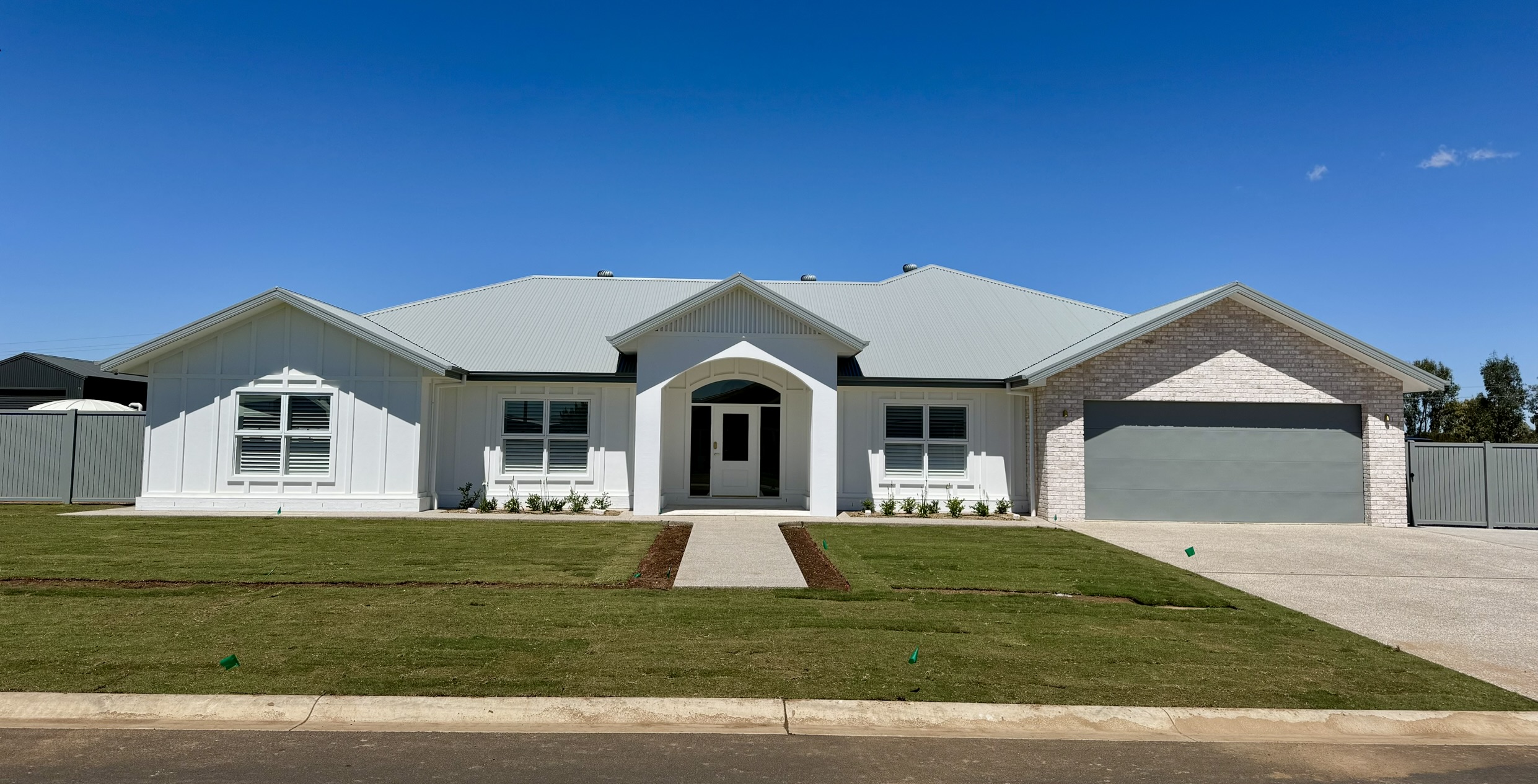
The block you choose shapes your budget, your timeline, and how your house will feel on a 45 degree afternoon.
When you’re buying land to build a house, check six things before you sign: the price against your total budget, the slope, the services, which way the block faces, the soil, and whether the land is registered and ready to build on. Then show the block to your builder before you commit, not after.
The order matters, because good blocks are hard to find in Dubbo right now. Michael Fuller, licensed builder at Robinson & Fuller Homes, says land is the biggest hurdle his first home buyers face right now. There isn’t enough of it, and finding a block that’s ready to build on is the hard part. This guide is for first home buyers scrolling the land for sale in Dubbo listings who haven’t spoken to a builder yet.
The short version
- Work backwards from your total budget, because land and house share the same $750,000 grant cap.
- Flat blocks with power and water connected cost the least to build on.
- Keep living areas and the alfresco off the west side of the house.
- Registered land is ready to build on. Unregistered land runs on the developer’s timeline.
Jump to:
- Your block checklist
- How much to spend on land
- Which way your house should face
- Registered and unregistered land
- When to talk to a builder
What should you look for in a block of land to build on?
A good first home block is one you can afford with the house on top, and that’s flat, connected and registered. Each check below changes what your house will cost or how soon you can start building.
Your block checklist
| Check | What to look for | Why it matters |
|---|---|---|
| Price | The land price plus the house you want | Land and build share one budget and one grant cap |
| Slope | A flat or gently sloping block | More fall means more site work before the slab |
| Services | Power, water and sewer at the boundary | Missing services add tanks, poles and connection costs |
| Aspect | Room for living areas to face north | West-facing living areas cook in a Dubbo summer |
| Soil | Any soil test the developer or agent already holds | The soil class sets your slab design and its cost |
| Registration | A registered lot with its own title | You can’t start building until the land is registered |
A flat block is a first home buyer’s friend
A flat block costs the least to build on. Michael says slope is always a big factor, because a block with plenty of fall adds cost before the slab goes down. That can mean cutting and filling the site or building retaining walls, and on a tight first home budget that money comes straight out of the house.
Power and water on blocks just outside Dubbo
Inside Dubbo, services are rarely a problem. Just outside town, some blocks have no mains power or no mains water. Michael has seen buyers face rainwater tanks to supply the whole house, or poles to run power to the build. Confirm what’s connected at the boundary before you sign.
How much should you spend on land when building your first home?
Work backwards from your total budget, leaving enough for the house you want once the land is paid for. For most first home buyers, that total is shaped by the $750,000 cap on the First Home Owner Grant.
Working backwards from the $750,000 grant cap
The $10,000 grant applies when your land, building contract and variations together come to $750,000 or less. Our guide to the First Home Owners Grant in NSW explains how that cap is counted. Michael’s example: a $300,000 block leaves about $450,000 for the house, which he calls tight.
The $350,000 stamp duty threshold on land
First home buyers in NSW pay no transfer duty on vacant land worth $350,000 or less. Above that, a reduced rate applies until $450,000, and the duty climbs quickly across that range, so run the block through Revenue NSW’s calculator before you make an offer.
Leave enough for the house you want
Some people find a block they love and squeeze the house to fit. Others pick the house first and look for land that leaves room for it. Starting with the house tells you what’s left for land before you fall for a block.
Which way should your house face in Dubbo?
Your living areas should face north where you can manage it, and your alfresco and main living spaces should never face west. Dubbo can reach 45 degrees, and the western sun is at its fiercest in the late afternoon, when you’re most likely to be home.
Keep the alfresco and living areas off the west
Michael says a lot of first home buyers need to be told this. Put the garage, laundry and bathrooms on the western side instead, and the hottest sun of the day stays off the rooms you use most.
Why north-facing living areas work
A north facing house lets low winter sun into your living areas, while eaves keep out the high summer sun. The Australian Government’s YourHome guide on house orientation in Australia says living areas facing up to 15 degrees west of north or 25 degrees east of north still get good sun.
Flipping or mirroring a plan to suit the block
A plan that faces the wrong way on your block can often be flipped or mirror-imaged so the living areas land on the right side. Classic Range plans can be adjusted this way, so a good block doesn’t have to face a particular direction.
What is the difference between registered and unregistered land?
Registered land is approved and ready to build on. Unregistered land is still being developed or is waiting on approval, so you can buy it but can’t start building until it registers.
Registered means ready to build
When a subdivision plan is registered with NSW Land Registry Services, each lot gets its own title. Once you’ve settled on it, your builder can lodge plans with council and get started.
Unregistered means you’re on the developer’s timeline
Unregistered land is sold all the time, often in new estates. The catch is timing. Michael says registration timeframes can be hard to judge, and developers can take longer than expected. Your land contract will usually include a sunset date, the latest date the plan must be registered by, so ask a conveyancer to explain what happens if the developer misses it.
Some loans and schemes need titled land
If you’re planning to use Help to Buy, Housing Australia’s building guide says the land must be titled before you settle on it. Your lender may have its own rules for finance on unregistered land too, so check with them before you sign for a block that hasn’t registered yet.
Should you buy land before choosing a builder?
Talk to a builder before you sign for a block, because the order you do things in can cost you months.
What happens when you find a builder last
Michael has seen it happen: someone buys a block from a developer or agent, waits for registration, then starts calling builders and finds long waits for a start date. The months spent waiting for the land could have been spent getting the house designed, priced and booked in. Our guide to how to choose a builder covers what to check once you start talking to builders.
How Robinson & Fuller Homes locks in your start
Robinson & Fuller Homes quotes the house you want for that particular block while the land is still waiting to register. If you sign the quotation, we hold a start date for when your land is due to register. Michael prefers working with clients from the moment they’re choosing a block, so he can advise on things like slope and aspect before they commit.
Why the price is re-quoted when the land registers
If six or 12 months pass between the first quote and registration, building costs can rise. So when your land registers, we re-quote the house, lodge the plans with council and start construction soon after. Looking at a block now? Send us the listing and we’ll tell you what we see.
Do you have to buy a house and land package?
No. Most Robinson & Fuller Homes clients buy their own block and sign a separate contract to build on it, and house and land packages are rare for us.
How a house and land package works
A house and land package bundles a block and a home design into one offer from a builder or developer. You still usually sign two contracts, one for the land and one for the build. Robinson & Fuller Homes has built one this year.
Building on your own land with us
You find the block, ideally with our input, and we design or adapt a plan to suit it. You can start from our house plans, such as the Classic Range, or have a custom plan drawn for your land.
Frequently asked questions
How long does it take for land to be registered?
It depends on the developer and the estate, so there’s no standard timeframe. Ask the developer or agent for the expected registration date.
Can I find out a block’s soil class before I buy it?
Often, yes. Michael suggests asking the developer or real estate agent whether any soil tests have been done on that block or nearby lots. A known soil class lets your builder price the slab with fewer surprises.
Can I build in Gilgandra, Narromine or Wellington?
Yes. Robinson & Fuller Homes builds in Dubbo and the surrounding areas, including Gilgandra, Narromine and Wellington.
Show Us the Block Before You Sign
A builder can spot a sloping block, a western aspect or a missing service before it costs you anything. Bring the land listing to Robinson & Fuller Homes and we’ll price a home for that block and hold a start date if the land is still waiting to register.
Call (02) 6882 7444, request a free quote, or visit the display home at 14 Stream Ave, Dubbo.
Written by the team at Robinson & Fuller Homes.
Disclaimer: This article is general information only. Get advice from a conveyancer or solicitor on any land contract before you sign it.
References
- Australian Government YourHome: Orientation
- Housing Australia: Help to Buy, Building a New Home Guide
- Revenue NSW: First Home Buyers Assistance Scheme